EART EXHIBITION
EXPLORING HUMANITY’S RELATIONSHIP WITH THE PLANET AND ITS ENVIRONMENTAL CHALLENGES
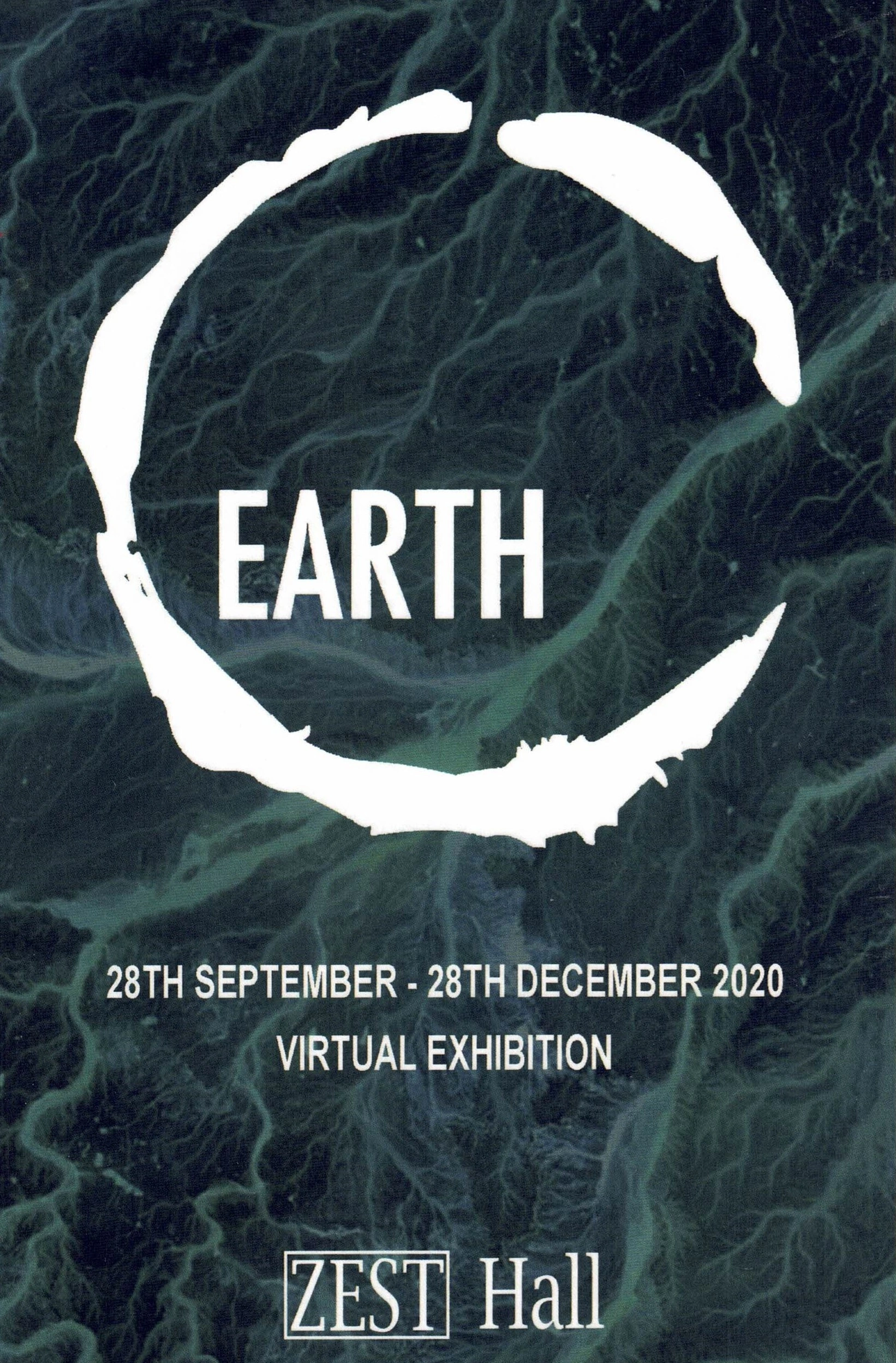
Earth, presented by Zest Hall, is an international virtual exhibition featuring the work of 51 artists from around the world. The exhibition examines humanity’s relationship with the planet and addresses some of the environmental challenges shaping the contemporary world.
Bringing together diverse artistic practices — including sculpture, installation, photography, collage, painting, and video — the exhibition presents a broad range of perspectives on the natural environment, human impact, and the consequences of contemporary patterns of consumption. Through these varied approaches, the participating artists explore themes of environmental responsibility, human dependence on nature, and the growing urgency of the global climate crisis.
The exhibition also highlights the capacity of contemporary art to create dialogue around environmental issues and to encourage greater awareness of humanity’s relationship with the natural world.
The photography series We Are Nature I by Nikolay Vlahov is selected for inclusion in the exhibition. Created in the Rhodope Mountains of Bulgaria, the series explores the connection between humanity and nature through photography.
Featuring artists from different countries and working across a range of media, Earth brings together diverse artistic perspectives in a collective reflection on the planet, its ecosystems, and the future of our shared environment.
The title of Vlahov’s photographic series encapsulates, in only three words, al I have written above. In each of the three images, the authority of the human crumbles away. Al encompass a human figure: naked, shrunken, and humbled by the larger landscape. The environment’s importance is honoured and homed in on, as the bodies that lie almost sacrificialy are diminished by a greater presence. But, there is a resonating warmth from these images too. The bodies are embraced by the earth, held by the curvatures, holows, and gaps. An equilibrium is reached when the power relations between humanity and nature are balanced out ‒ it’s nature who alows the bodies in and in return the bodies are comforted, tranquil, and at rest. Jessica Saunders review, Round Lemon
ARTIST INTERVIEWS
Your work poses some interesting questions regarding the relationship between humans and the Earth. How would you describe your own relationship to the earth?
Humans came into being on Earth because nature had assured all prerequisites and had provided all necessary conditions for their evolution and further existence on this small but enormously astonishing planet. If we take it in general, the connection between nature and human is analogous to the intimate connection between parent and child. It sounds like a cliché, but it is also a very strong and absolutely valid idiomatic concept for ages, and it stands up in full legitimacy till today. That is the reason why most cultures – and respectively in most of the languages – people have idiomatic expressions like “Mother Earth” and such.
We are used to think of ourselves as the highest peak of evolution, as natures’ best, most complex and unprecedently exquisite achievement. If we stand proudly behind such humanistic theoretical position – we have all grounds to claim it, since we undoubtedly have reason which differs us from minerals, plants and most animals, – that does not mean we have any justification for our sense of supremacy; it doesn’t mean we have any exculpation for our baneful egocentrism or any vindication for our lust for power or ambition for domination. Having reason engages us with ethical responsibilities – this is a natural consequence and a moral imperative at the same time. We have to be reasonable; we must be responsible for all our deeds and accountable for all our actions. And one of the most important liabilities of ours is that we must follow and respect nature’s laws even as a child should cherish and esteem its parents and home. As a child of Earth – our common home, I need to keep my harmonious and caring connection with nature. Preserving and treasuring this close connection gives me calmness and satisfaction. This mindset appears as an intention or a starting point even in some of my artworks – photographs and paintings as well.
Where did you take these photographs? Do you have any personal connection to this particular landscape?
The photographs were taken at one of the many ancient rock sanctuaries – In Kaya – located in the Rhodope mountains (called also just the Rhodopes). The Rhodopes are situated in the southern part of Bulgaria, in an area with amazingly rich and diverse cultural heritage. You can find there a plenty of ruins of ancient Thracian cities and mystic places of cult rituals, remains of mighty medieval castles and fortress, beautiful old orthodox churches and monasteries, and of course idyllic picturesque villages with traditional Bulgarian or Ottoman architecture from the 18th or the 19th century. The Rhodopes are also associated with the mythical figure of Orpheus – according to the legends his body, dismembered by the Bacchantes women, is buried somewhere in this area and his head is still singing in the Thracian mountains, i.e. the Rhodopes.
I found In Kaya rock sanctuary by chance during a trip with friends of mine this summer. Translated from Turkish, In Kaya means a blue rock (many names of places in this region are preserved unchanged since the time of the Ottoman Empire). Most of those ancient Thracian sanctuaries are carved directly in giant stones on the top of heights and hills or close to natural hollows and caves. Some of the cravings in the stone serve as open-air water altars. In Kaya is one of those rock sanctuaries – there are cravings and there is a small cave nearby. It is about a six-meter-high rock massif and at the top of the rock there are four round-shaped rock pits, which probably served to place a wooden structure that closed a large natural hole in the rock.
The idea for the photographs came out at the very moment we’ve reached that place. It was not a premeditate or thought out in advance project. It was a kind of irresistible impulse; it was a calling. I felt an insuperable need to coalesce, to unite and bled with the astonishing beautiful nature out there, with the ancient mythical and mystical energy that surrounded me. After a couple of months of lockdown, of mostly staying at my apartment so far away from nature, I felt myself as an abandoned child, as a newly born baby whose navel-string is severed, as a helpless baby who feels lonely and defenceless for the first time. By surrendering to nature, I felt myself protected again, as if I was in a womb again. It was such a vital experience for me – a life-saving reconnection with nature. After all we are nature, our bodies are nature.
This series is an interdisciplinary project, as the concept of the photographs is yours, whilst you worked with photographer Iliya Gramatikoff to execute the shots. How did you work with Gramatikoff to make sure your ideas were captured to your satisfaction?
This was our first artistic collaboration born out of pure chance. As I said, it was a completely impulsive idea of mine and I needed it documented as potential material for an eventual art project. Iliya Gramatikoff is not a professional photographer but just a passionate lover of photography and visual arts. Instead, he is a musicologist and academic teacher in history of music. But he loves taking pictures during trips or while travelling abroad. He has a wonderful sense of visual composition, rhythm and proportions. He definitely has an eye for the best shots. So, I’ve explained to him the idea I wanted to represent, the story I wanted to tell in a few frames. I’ve suggested some possible angles and perspectives, but I had not so many options to control the process while lying in a fetus-style posture. Of course, he understands me even in a few words and he absolutely comprehended the idea. The scariest and funniest thing at the same time was that this place is quite dangerous – most parts of the cliff are sharp and right next to them there are breath-taking precipices. But he was such an enthusiast, enjoying this adrenalin-charged and on the edge of extreme outdoor artistic activity.
What did you make of Jessica Saunder’s comments about your work in her review ‘Challenging Anthropocentrism: The virtual space?’
I am really happy with and even flattered by Jessica Saunder’s comments. I was more than pleased by her observations and contemplations. She has absolutely sensed the whole idea behind those pictures. Moreover, she brings out the concept behind them in the philosophical horizon of the object-oriented ontology or the so-called speculative realism. Those are one of the leading theories nowadays, one of the most intriguing achievements of contemporary philosophical thought.
Your concept of reestablishing our ties to nature reminds me very much of Ana Mendieta’s work. Do you think we should reinforce our bonds to nature by arts practices such as these, or is this an aesthetic concept to encourage viewers to question their relationship with the earth?
For me both of them are equally important. As mentioned above, I experience personal necessity to stay connected with nature through all possible ways including art practices. Even on a physical level – I need to be in harmony with my own body, to listen to its signals in order to accomplish the fragile balance between body and soul. The creative soul requires the comfort which a relaxed body could provide. According to my opinion, such harmonious state of body and soul is possible and achievable only through cherished and most pure connection with nature.
At the same time through my art – through some of my paintings and most of my photographs, including the cycle We Are Nature I, – I would like to rise an appeal to the audience to give a thought, to meditate on this subject matter, to get aware of the life-saving importance of the fact that we have to be responsible, that we need to take a lot of care of our common home (our nature) and our personal shelters and sanctuaries (our bodies). By devastating nature, we devastate ourselves. It is simple as that – this is a suicidal undertaking. And all the apocalyptical cataclysms and all the terrifying diseases during just the last few decades are threatening demonstration and categorically indisputable proofs of that. If we want to stop all of this, we must turn back again to what gave us life – we must get back to nature. We just need it. We need to be active.
What are you currently making and where do you see your practice heading in the next few years?
Currently, I’m devoting myself to two main causes – art and education. This is my way to be active through making art and educating small children at kindergarten. This is my way to keep contributing to our common cause, to make small steps toward the change we desperately need.